African Lovegrass (Eragrostis curvula) is a serious threat to both livestock production and the biodiversity of the Far South Coast. It can invade native pastures, reduce pasture diversity and productivity, and threaten the ecological values of Lowland Grassy Woodlands.
Through funding from South East Local Land Services, FSCLA has worked with landholders and researchers in the Bega Valley to investigate practical ways of managing African Lovegrass. This work has combined scientific research with the experience and ingenuity of local landholders, resulting in a series of trials and information resources to help landholders make informed management decisions.
One approach investigated through this work is roller wiping, where herbicide is selectively applied selectively to African Lovegrass avoiding contact with the lower pasture grass species and forbs using a roller or wiper. Bega Valley research found roller wiping can be an effective way to reduce African Lovegrass, particularly when combined with appropriate grazing management. The approach takes advantage of the difference in palatability and growth between African Lovegrass and desirable pasture species.
However, there is no one-size-fits-all solution. While the benefits of roller wiping are relatively well established in more productive or fertilised pastures, there is less certainty around its economic benefits in low-input native pastures. FSCLA's trials have therefore focused on understanding both the effectiveness and the costs of roller wiping, as well as its potential effects on native pasture composition and the ecological values of Lowland Grassy Woodlands.
The research highlights an important principle for managing African Lovegrass: successful control needs to be considered alongside grazing management, pasture condition, costs and the long-term health of the native pasture. Local knowledge and experience remain an important part of developing practical management.
Information Sheets on Managing ALG in native pastures in the Bega Valley (click for link)
- Management strategies, Info Sheet 1
- Roller Wiping to control ALG, Info Sheet 2
- ALG in Lowland Grassy Woodlands, Info Sheet 3
Results of the research can be discussed by contacting Josh Dorrough (FSCLA executive committee member) on 0438 547 446
Research trials with Queensland University of Technology around Candelo
FSCLA assisted QUT researchers in a trial from 2019 to 2023, working with landholders across the Candelo region to investigate the impact of African lovegrass (ALG) on lowland grassy woodlands (LGW) — an important and threatened ecosystem in the Bega Valley.
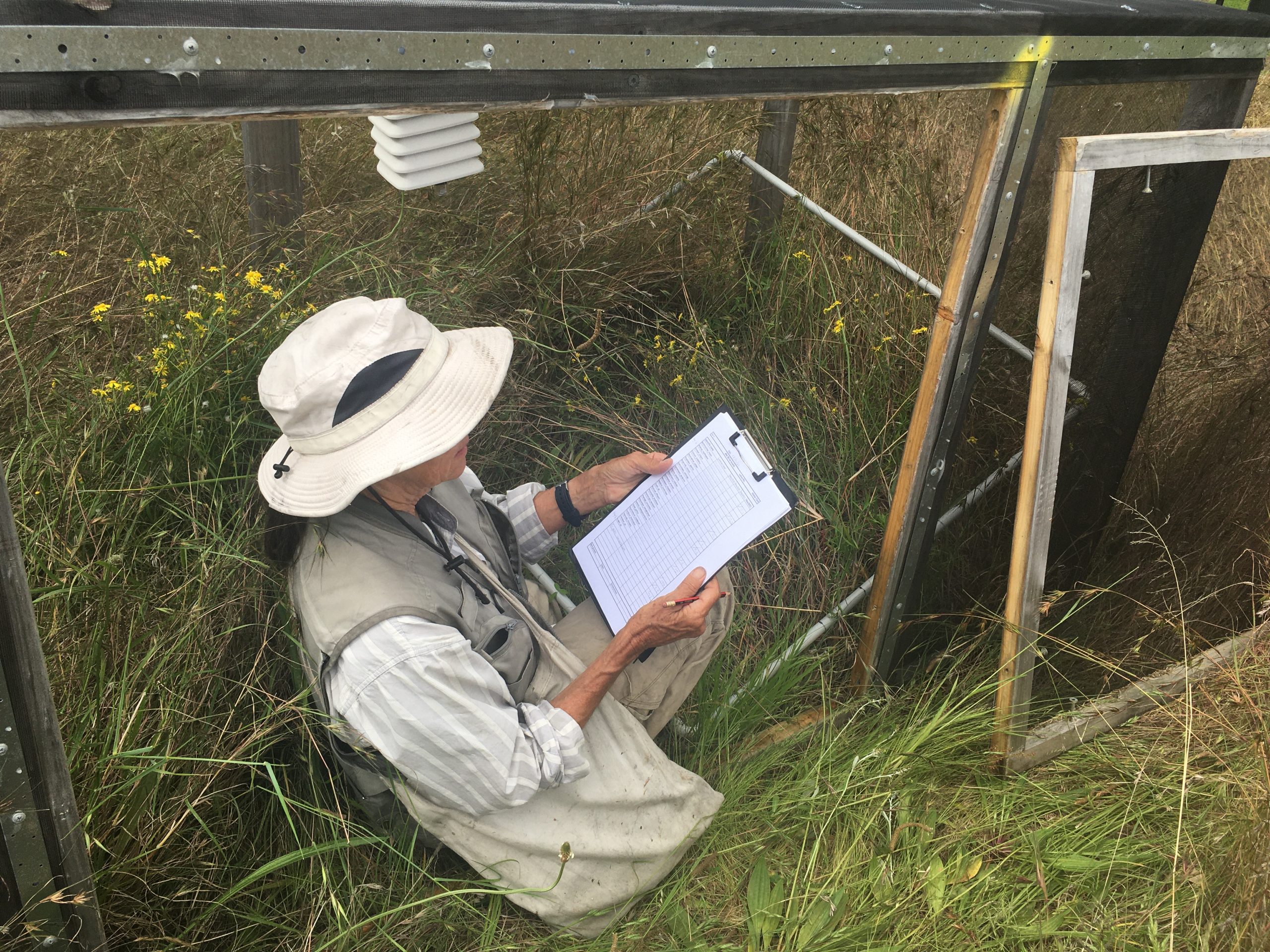
The research established study sites across six farms, comparing areas dominated by native kangaroo grass with areas where African lovegrass had become established. Researchers also looked at how different grazing animals influence vegetation, using fenced plots to exclude livestock, native herbivores and invertebrates.
The project is helping build a better understanding of how African lovegrass changes native grassland communities and how grazing and other management practices can influence the health and recovery of these valuable ecosystems.
Publications from this work can be seen here: